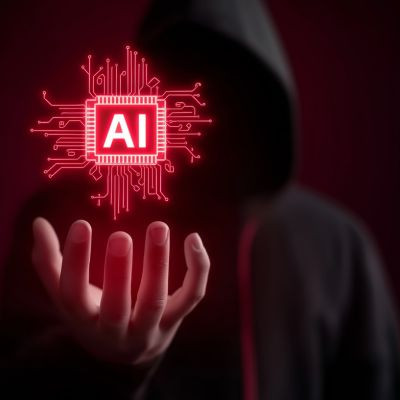
It’s undeniable that artificial intelligence is a big part of doing business in 2026. Given this, it is not surprising that many products are being developed to push the technology into areas of business it hasn’t touched. Today, we are going to tell you about the difference between AI models and why one man’s great idea could be the thing that set AI back.
JensenIT Blog
Does the idea of cybersecurity strike fear into your heart? We know it’s not every business’ specialty, but that doesn’t make it any less important for companies like yours to consider. Today, we want to make it as easy as possible for your employees to practice appropriate cybersecurity measures, and that starts with a simple one-page cybersecurity cheat sheet.
We will be the first to admit it: we are obsessed with security.
In an era where cybercriminals are more sophisticated and persistent than ever, that obsession is a necessity. Modern security requires a fundamental shift in mindset: you cannot implicitly trust anyone. Not outside hackers, and—uncomfortable as it may be—not even the people inside your organization.
This trust-no-one approach is the foundation of Zero-Trust Security.
It isn’t rare for business owners to seek out opportunities to trim expenses and cut costs wherever possible. Your security should never be someplace you look… particularly if you hope to ever secure the increasingly crucial business insurance you need.
Now you may be saying, “But my IT is surely good enough.” Unfortunately, that standard isn’t sufficient in the eyes of insurance providers, and as a result, it actually becomes more expensive than having the right technology protections in the first place.
As an IT service provider, our techs spend their days at the intersection of cutting-edge and business-critical. In 2026, the conversation about each has shifted. It is no longer about whether you should use AI, because everyone is, but about the risks of trusting it blindly.
We have seen it firsthand: companies that treat AI like a set-it-and-forget-it solution often end up calling us for emergency damage control. Here are the major pitfalls of over-trusting AI and how to keep your business from becoming a cautionary tale.
The greatest vulnerability in your business’ network security actually has nothing to do at all with the systems in place. It’s actually your employees who will ultimately put your company at risk. Hackers rely on the fact that your team is busy, stressed, and trying to be helpful, and this helps hackers engineer moments where employees will click first and ask questions later, much to your business’ detriment.
As we stand on the threshold of a new year, it’s worth noting that the term "cybersecurity" didn't even enter the common lexicon until the late 1980s. Before that, we just called it "computer security"—mostly involving locking the server room door and hoping nobody guessed the password was "admin."
Fast forward to today, and the game has changed entirely. "Hoping for the best" is no longer a viable business plan. As you prep your resolutions, it’s time to hit the ground running with a cybersecurity posture that is as modern as the threats we face—a goal that will require training for your entire team.
While you’re busy shoring up your cybersecurity measures, it’s worth asking what you’re doing about physical security breaches. Considering the risk they pose to your employees, data, and equipment, you shouldn’t leave this issue unaddressed for your business. Any small business owner should strive for the peace of mind that physical security can bring about.
How many employees do you have who keep your company’s passwords on sticky notes stuck to their monitors? This simple, seemingly benign trick could be putting your business at risk. After all, if you can see the password on a sticky note, so too can others who happen to be wandering around the office—including potential threat actors.
Adopting smart office technology—from connected lighting and thermostats to sophisticated monitoring sensors—can transform your workspace, offering efficiency and a modern aesthetic. Yet, as IT experts, we must guide you past the shiny facade to confront a critical reality: every new smart device is a potential gateway for cyber threats.
You should not have to sacrifice security for the sake of being "high-tech." However, implementing these solutions without a robust security strategy is a risky gamble.
Despite the immense productivity and convenience that come from using a smartphone, it’s important to remember that these devices are miniature computers in our pockets. As such, they are just as susceptible to threats as a computer or laptop. According to the National Security Agency, powering down your device is one of the most effective ways to protect your smartphone from various threats. Here’s why.
It would seem that the people responsible for the recent heist at the Louvre, which netted over $101 million in jewelry, may have used a more complicated plan than strictly necessary. According to a French publication, the famous museum has a long history of cybersecurity mistakes and faux pas… many of which, given the museum’s fame, are truly shocking.
Let’s go over what we know about the Louvre’s protections over the years, and what they suggest about the current state of things. We’ll probably learn a thing or two by doing so.
An old fable says that a frog placed in a pot of boiling water will jump out immediately, but if the water is warmed to boiling with the frog already in it, the frog won’t notice until it is already too late. Many businesses today act like that frog, overlooking minor tech issues that signal a growing problem until the damage is done.
Let’s see if we can identify some of these issues to help keep you out of hot water.
Happy Halloween! Tonight, ghosties and goblins will roam from door to door, collecting candies along the way. This is to be expected. Less expected are the cyberthreats and attacks that darken the doors of modern businesses of all shapes and sizes.
Let’s talk about the things you need to do to keep your business safe, inside and out, every night of the year.
It’s easy for employees to reuse passwords just to make things easier for themselves; after all, why use different passwords when you have a dozen accounts to remember passwords for? Unfortunately, this habit will come back to bite you, especially if your business is ever involved in a data breach. These credentials could be put up for sale on the dark web… and that’s just the beginning of your problems.
Let’s say that a small business, maybe even one of your neighbors, just poured thousands of dollars into the latest and greatest security software and firewall system. You’re impressed… until a disgruntled employee walks in one night, nothing to stop them, and takes a hammer to the server they have behind an unlocked door.
Suddenly, there’s one less small business, and there was nothing that expensive security software could do about it.
While still critical to get right, passwords aren’t nearly as secure as you would expect them to be. They can be guessed (especially if proper password practices haven’t been followed), stolen in data breaches, or phished from a well-meaning—albeit shortsighted—employee.
Passwords are basically the lock built into the front door of a building. They’re enough to keep out honest people, but what about the people who are willing to go to the deep web and 3D print the master key to the type of lock you use?
Did you know that during World War II, Allied codebreakers didn't just crack the German Enigma code with pure math? They also used clever tricks, like baiting the Germans into sending predictable messages, to expose the machine's inner workings. History proves this approach worked then, and (unfortunately) continues to work now.
This art of manipulating a system to reveal its secrets has found a new, high-tech home in the world of artificial intelligence. It's called prompt hacking, and it's essentially a form of digital social engineering aimed directly at the AI models businesses are starting to rely on.